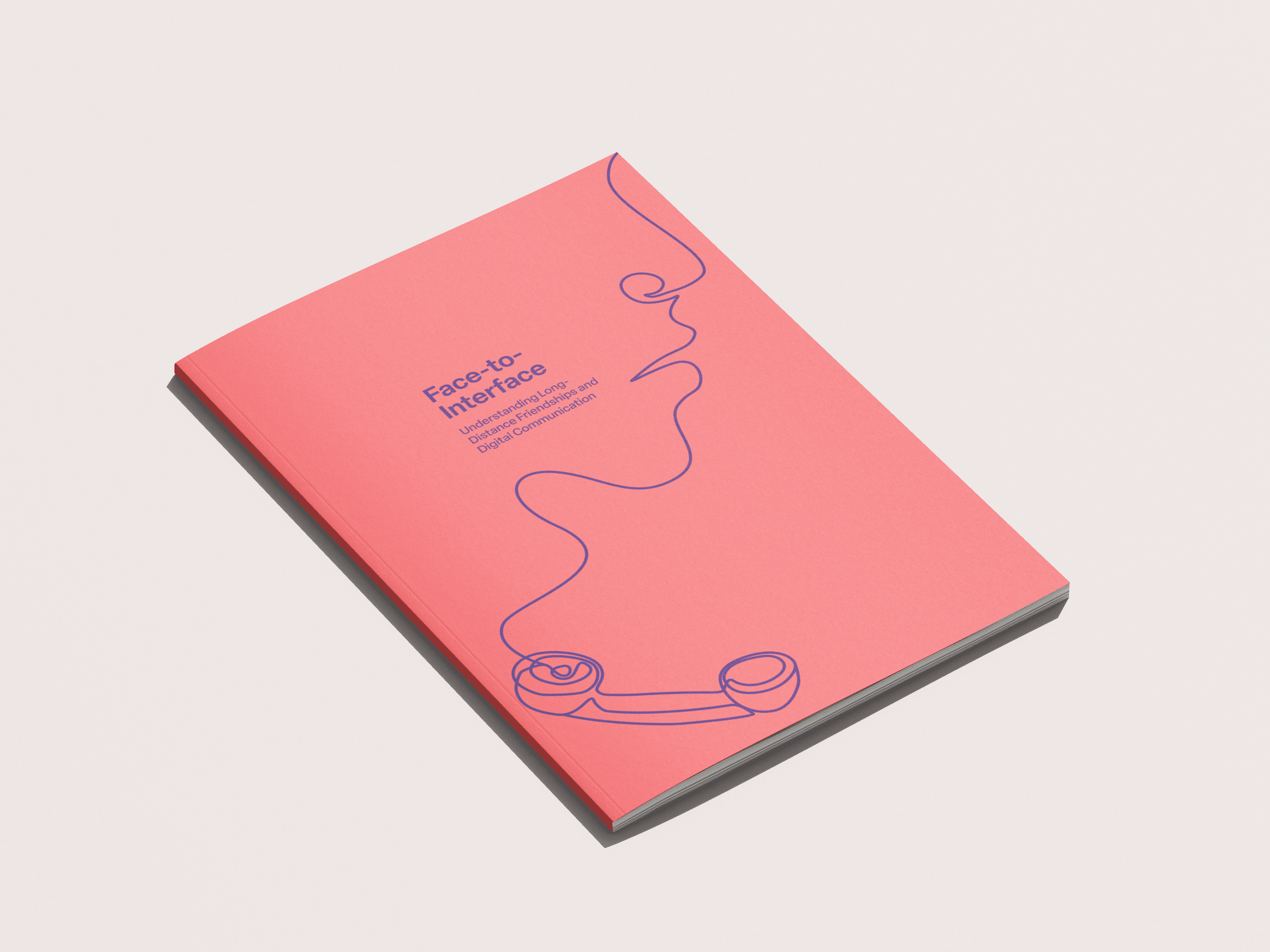
FACE-TO-INTERFACE
WHat
Design Research | Field Studies | Zine Design
ROLE
[edit]
TIMELINE
Fall 2025 | 10 Weeks
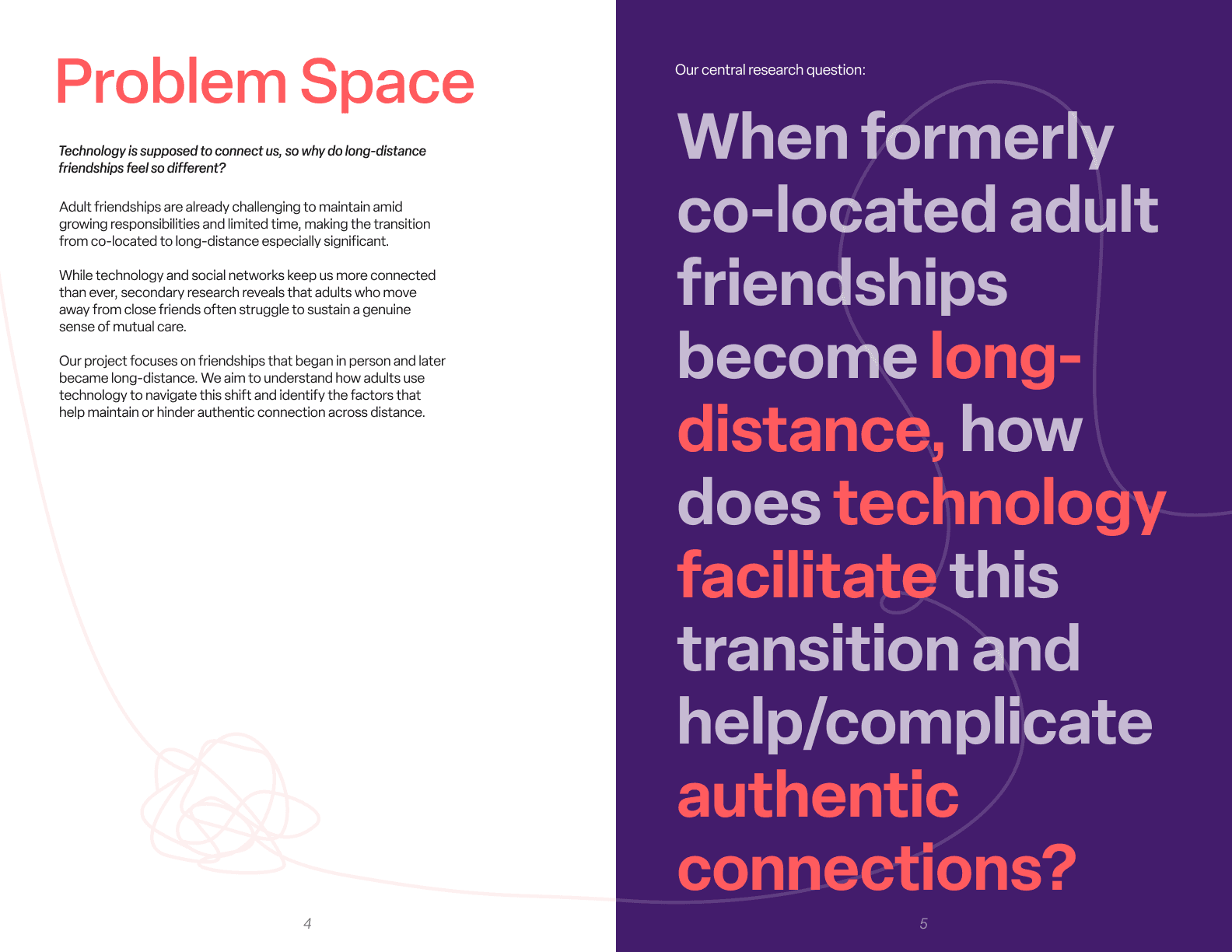
The Problem Space.
Adult friendships are already challenging amid growing responsibilities, and the transition from co-located to long-distance often disrupts the sense of mutual care people once shared. Even with constant access to digital communication, many adults struggle to feel genuinely connected after a move.
The Question.
When formerly co-located adult friendships become long-distance, how does technology facilitate this transition and help/complicate authentic connections?
THE TEAM.

SECONDARY RESEARCH.
Technology can strengthen adult friendships, but it also introduces new complications, such as constant availability expectations and managing emotional capacity.
The types of maintenance behaviors digital tools encourage don’t always align with what adults actually value.
Changing adult circumstances, like less time and more responsibilities, transform how people maintain relationships and redefine what being a good friend looks like.
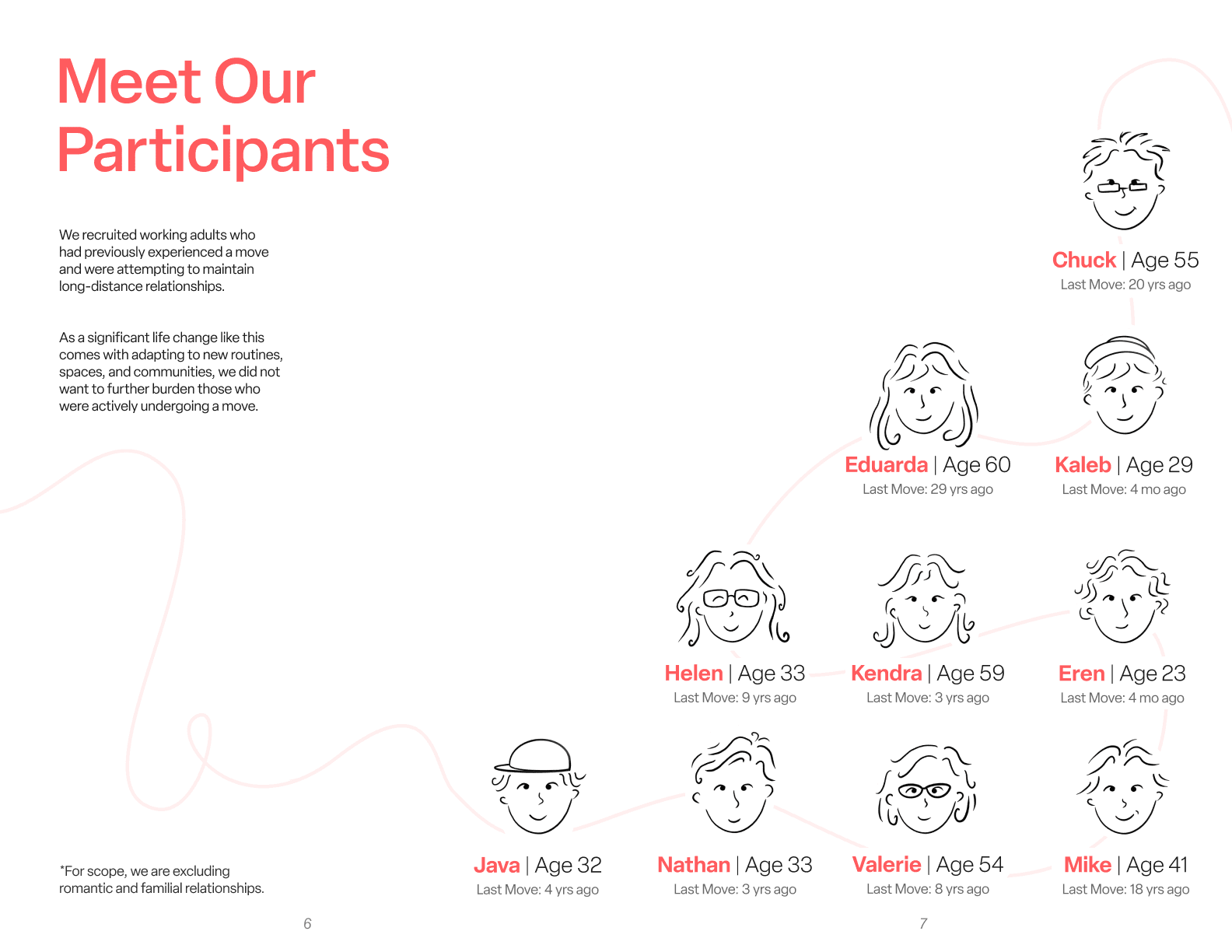
Our Participants.

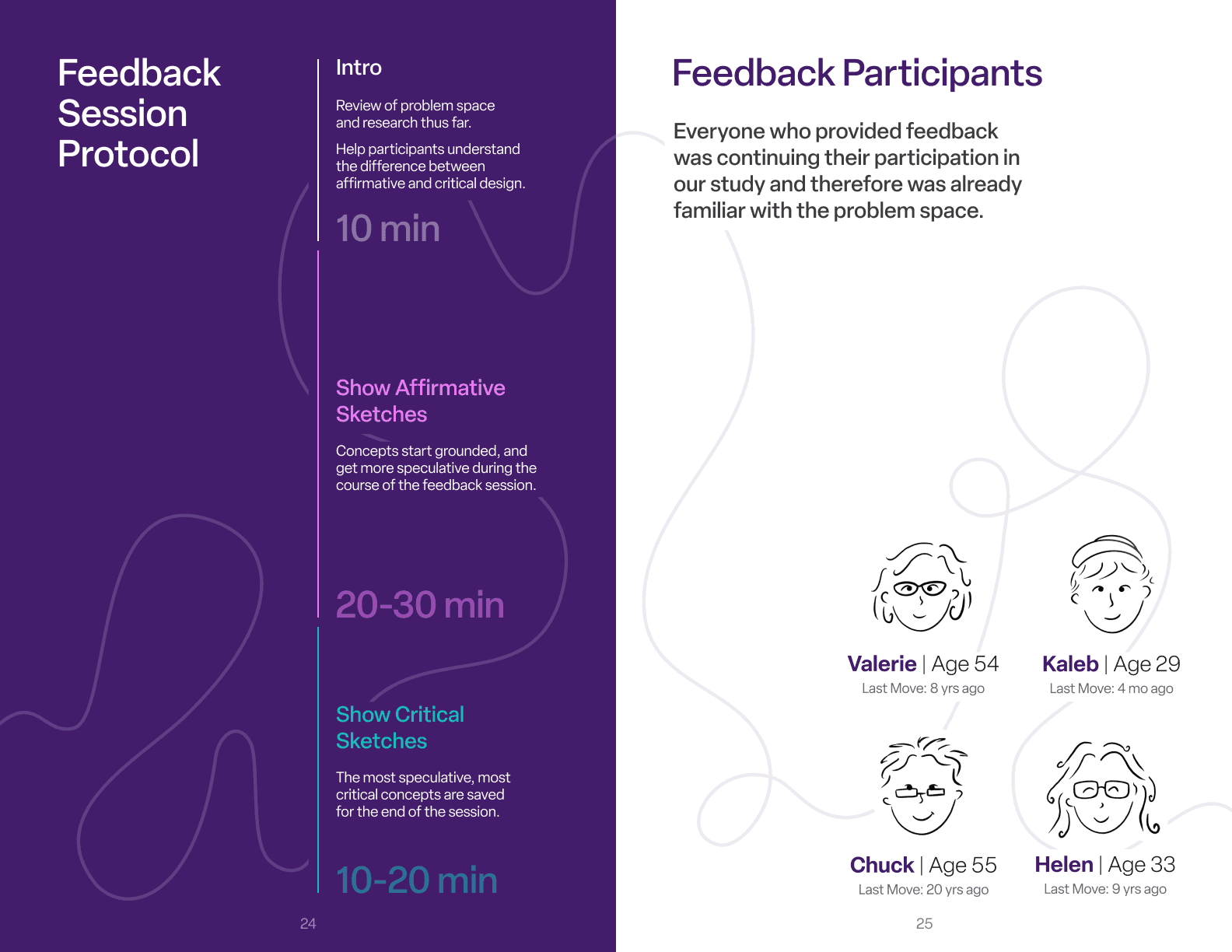
Chuck
| Age 55
Last Move: 20 yrs ago

Eduarda
| Age 60
Last Move: 29 yrs ago

Eren
| Age 23
Last Move: 4 mo ago

Helen
| Age 33
Last Move: 9 yrs ago

Java
| Age 32
Last Move: 4 yrs ago

Kendra
| Age 59
Last Move: 3 yrs ago

Mike
| Age 41
Last Move: 18 yrs ago

Nathan
| Age 33
Last Move: 3 yrs ago

Valerie
| Age 54
Last Move: 8 yrs ago

Kaleb
| Age 29
Last Move: 4 mo ago
As a significant life change like this comes with adapting to new routines, spaces, and communities, we did not want to further burden those who were actively undergoing a move. This focus allowed us to examine the impacts of the move without the added instability and with the deeper reflection from the participants.
In total, we conducted 10 individual research sessions, with team members alternating rotating between interviewer and note-taker roles.
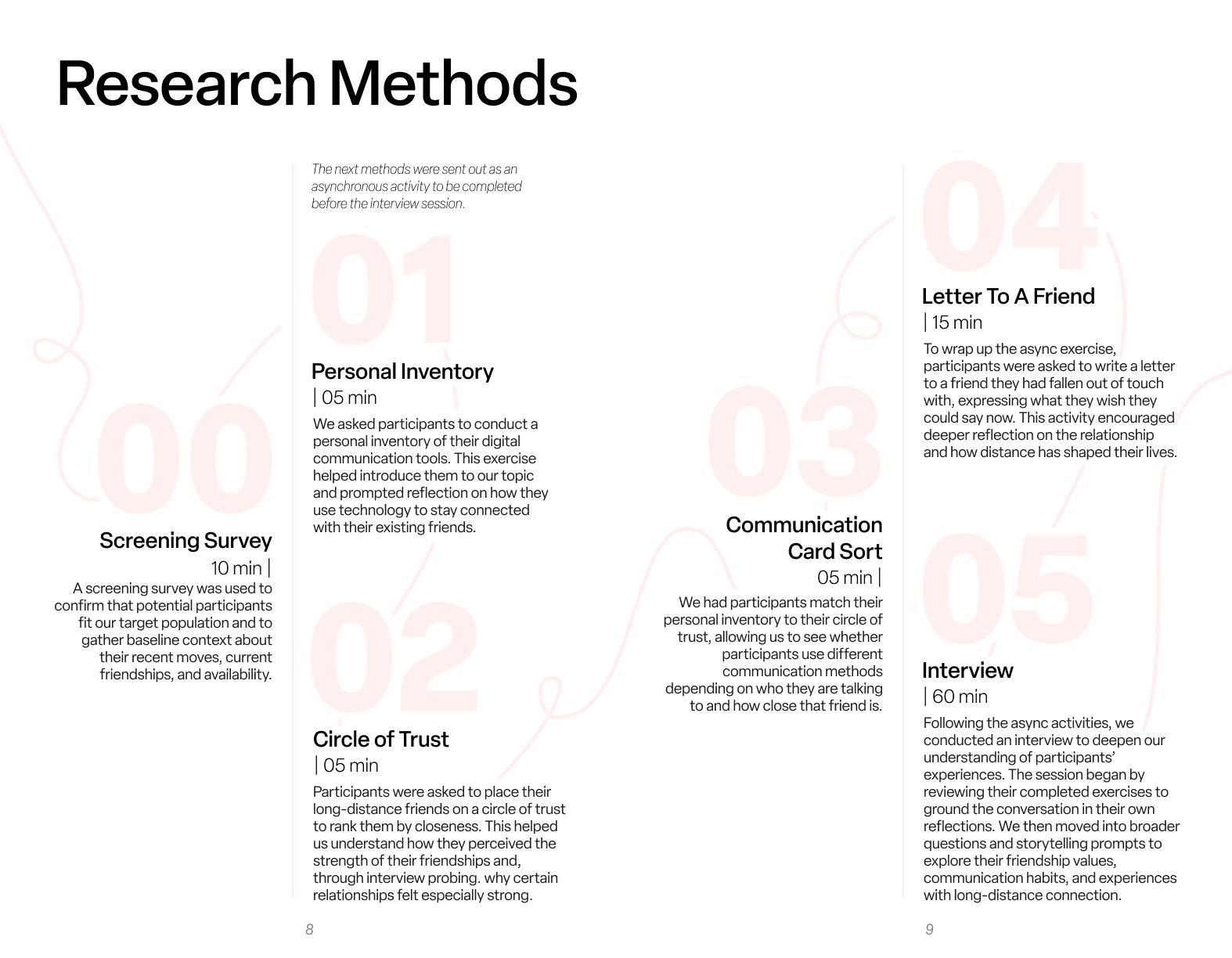
00. Screening Survey | 10 min
A screening survey was used to confirm that potential participants fit our target population and to gather baseline context about their recent moves, current friendships, and availability.
The next methods were sent out as a cultural probe to be completed before the interview.
01. Personal Inventory | 05 min
We asked participants to conduct a personal inventory of their digital communication tools. This exercise helped introduce them to our topic and prompted reflection on how they use technology to stay connected with their existing friends.
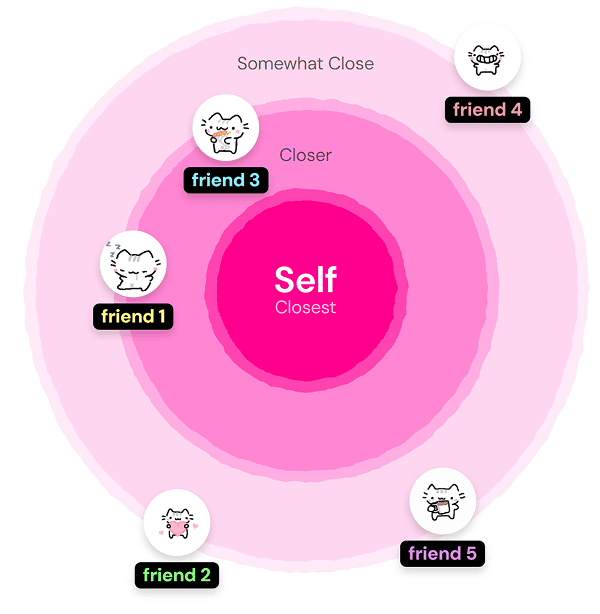
02. Circle of Trust | 05 min
Participants were asked to place their long-distance friends on a circle of trust to rank them by closeness. This helped us understand how they perceived the strength of their friendships and, through interview probing. why certain relationships felt especially strong.
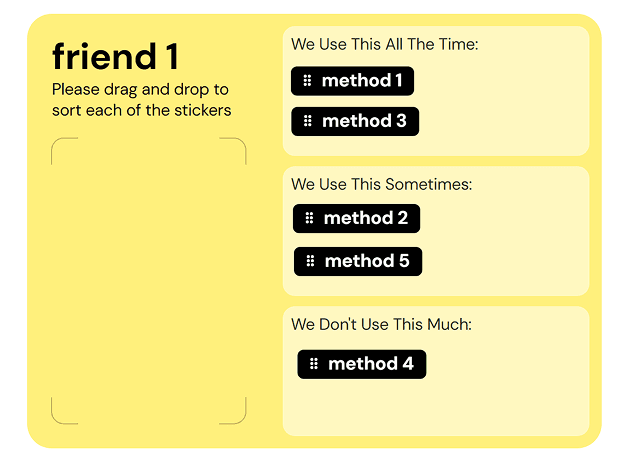
03. Communication Card Sort | 05 min
We had participants match their personal inventory to their circle of trust, allowing us to see whether participants use different communication methods depending on who they are talking to and how close that friend is.
04. Letter to a Friend | 15 min
To wrap up the async exercise, participants were asked to write a letter to a friend they had fallen out of touch with, expressing what they wish they could say now. This activity encouraged deeper reflection on the relationship and how distance has shaped their lives.
05. Interview | 60 min
Following the async activities, we conducted semi-structured interviews to deepen our understanding of participants’ experiences.
The session began by reviewing their completed cultural probe activities, grounding the conversation in their own reflections and communication habits.
In the second half of the interview, we explored friendship values, moments of connection and tension, and how authenticity shows up across distance. Participants also completed a short talk-aloud exercise using both familiar and less familiar communication tools to reveal real-time behaviors, instincts, and emotional responses.
SYNTHESIS.
After completing our interviews, we moved into a collaborative synthesis process to transform raw stories, quotes, and observations into meaningful insights.
We coded every transcript, tagging quotes across themes such as communication habits, friendship dynamics, emotional boundaries, digital challenges, and contextual circumstances. These tags were then grouped, sorted, and re-sorted as we looked for patterns, tensions, and emerging principles.
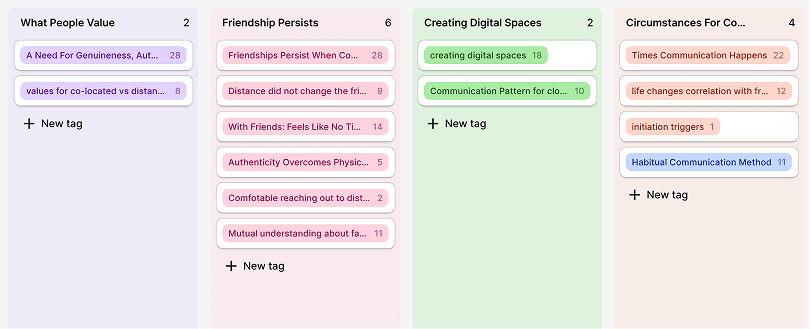
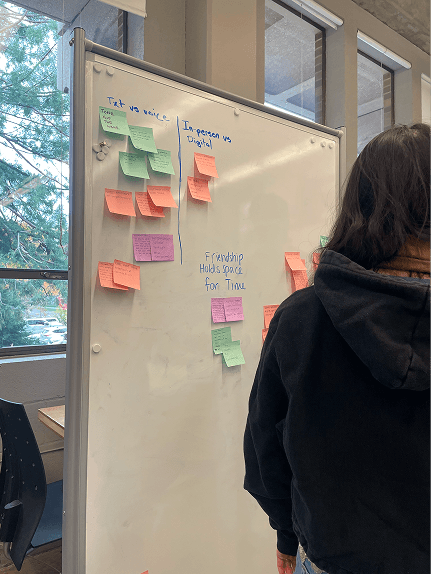
This stage was unexpectedly challenging: our entire group was sick for much of the synthesis period, which meant coordinating across constant Zoom calls and asynchronous check-ins. We rotated roles, supported each other through low-energy days, and adapted our workflow so that everyone could still participate meaningfully.
insights & principles.
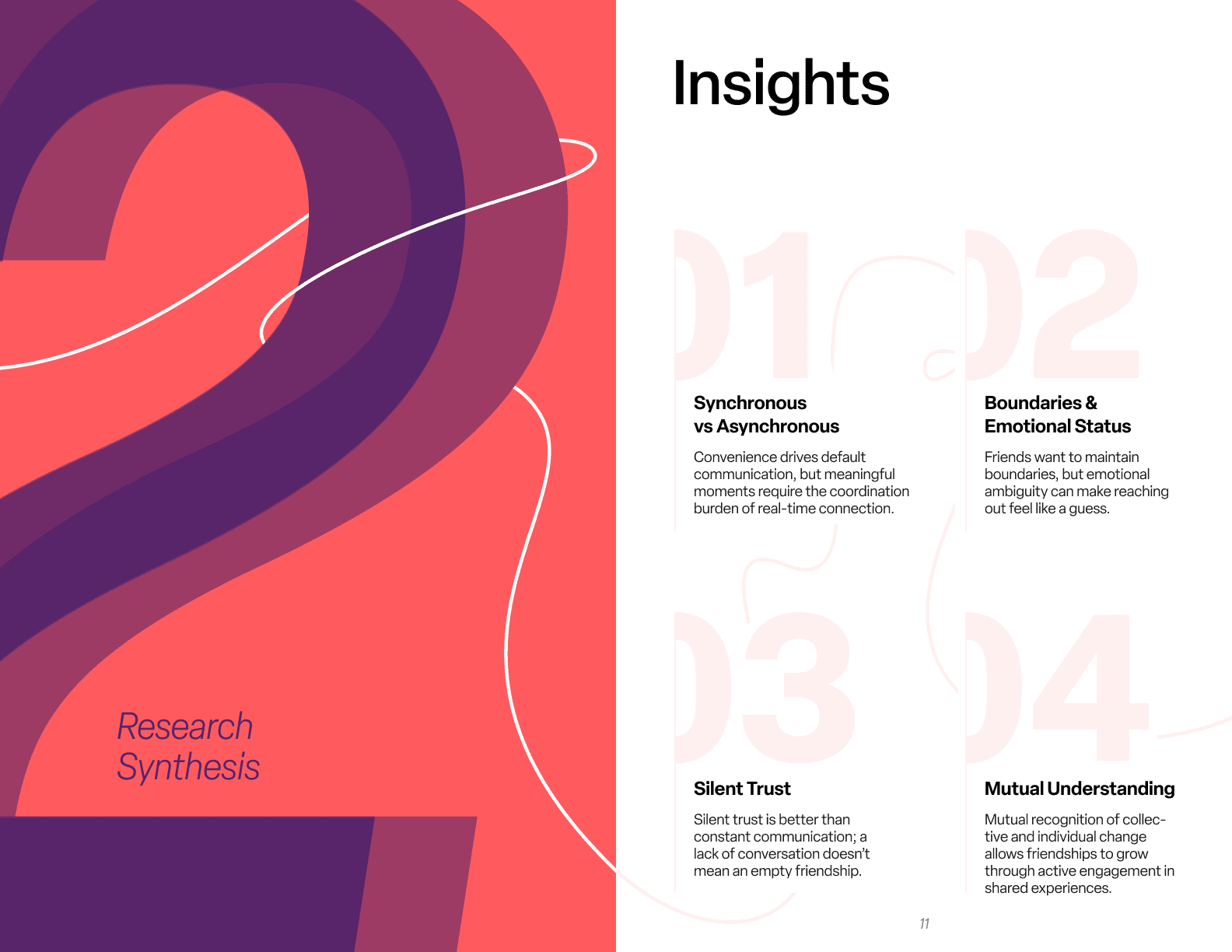
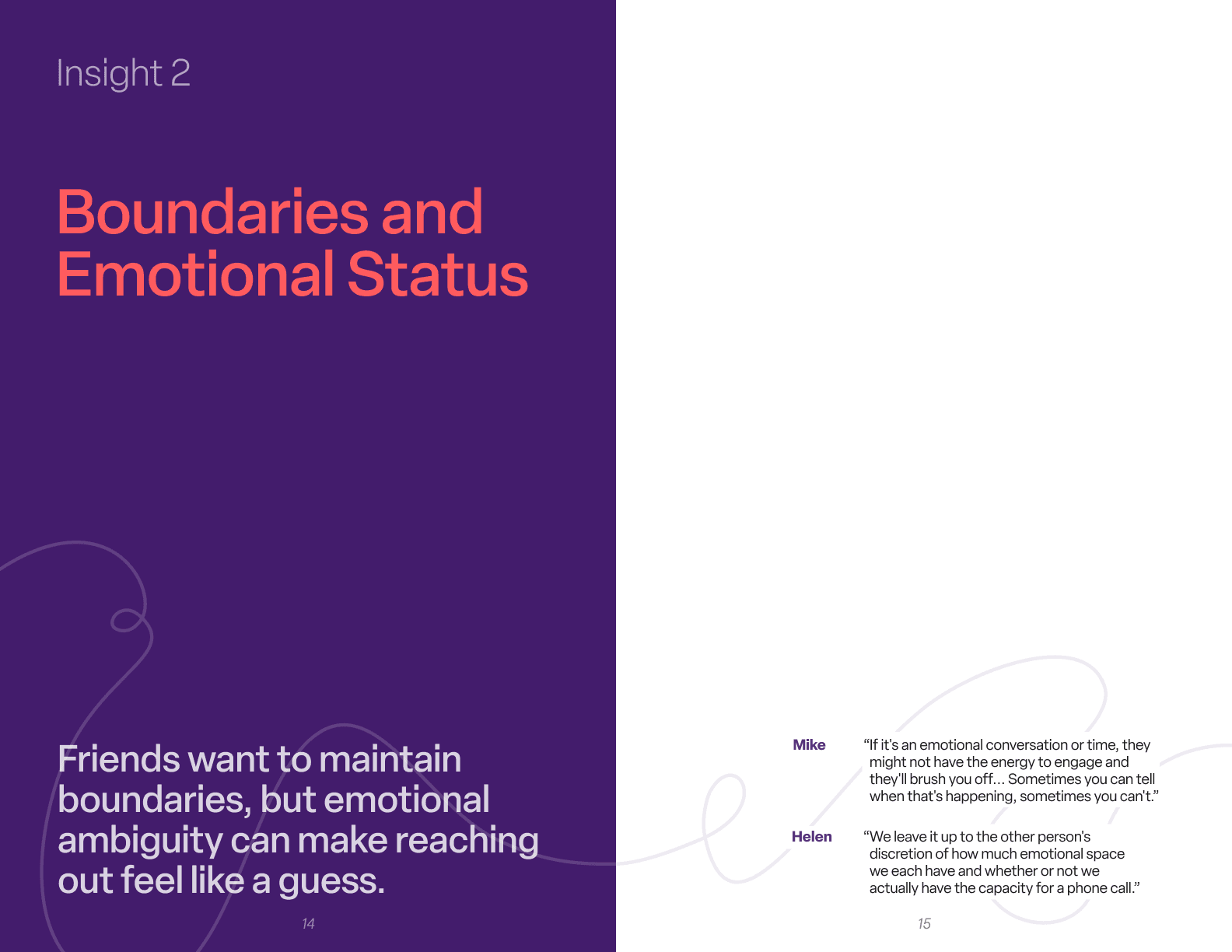
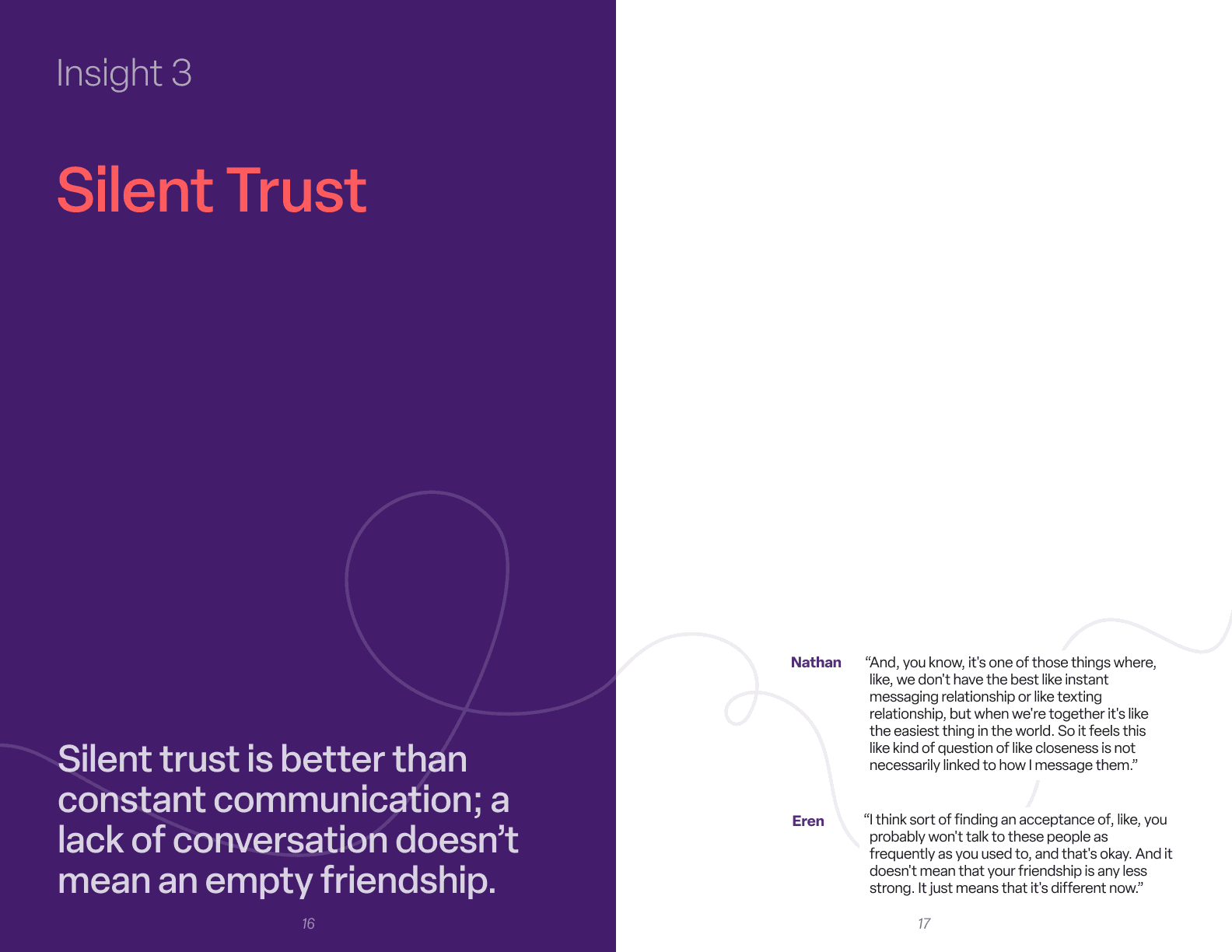
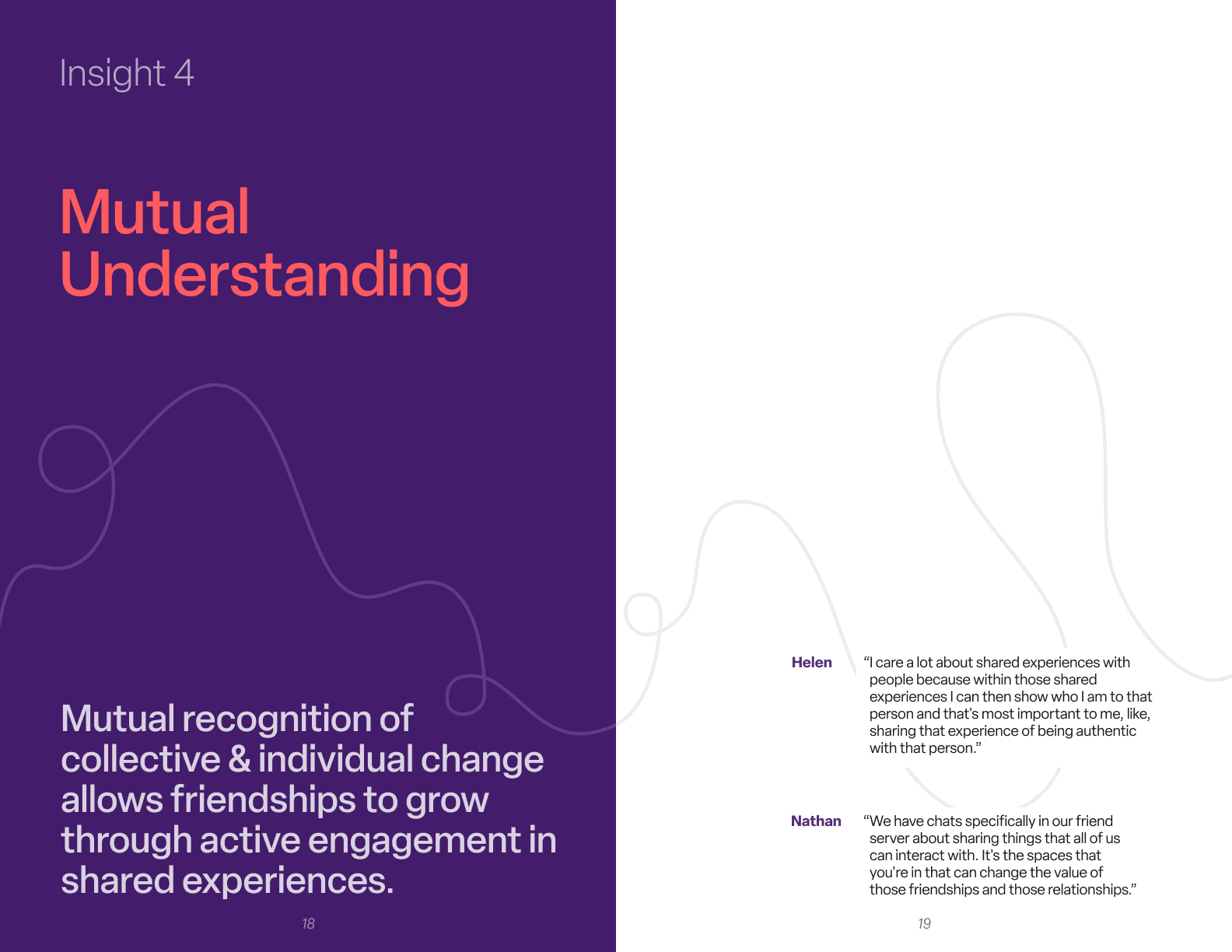
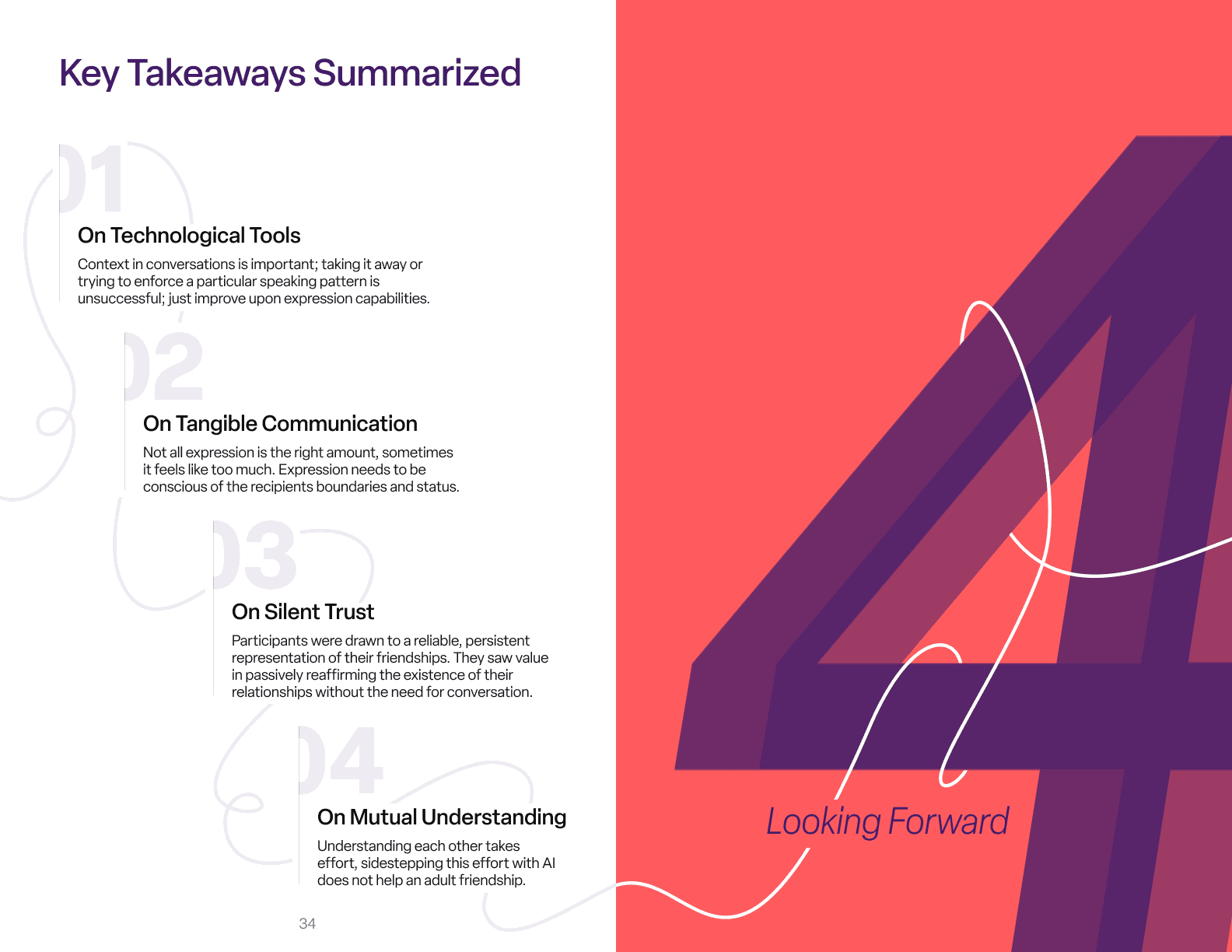
Through our synthesis process, we transformed hundreds of quotes, stories, and observations into four core insights that describe what long-distance friendship actually feels like for adults using digital communication tools.
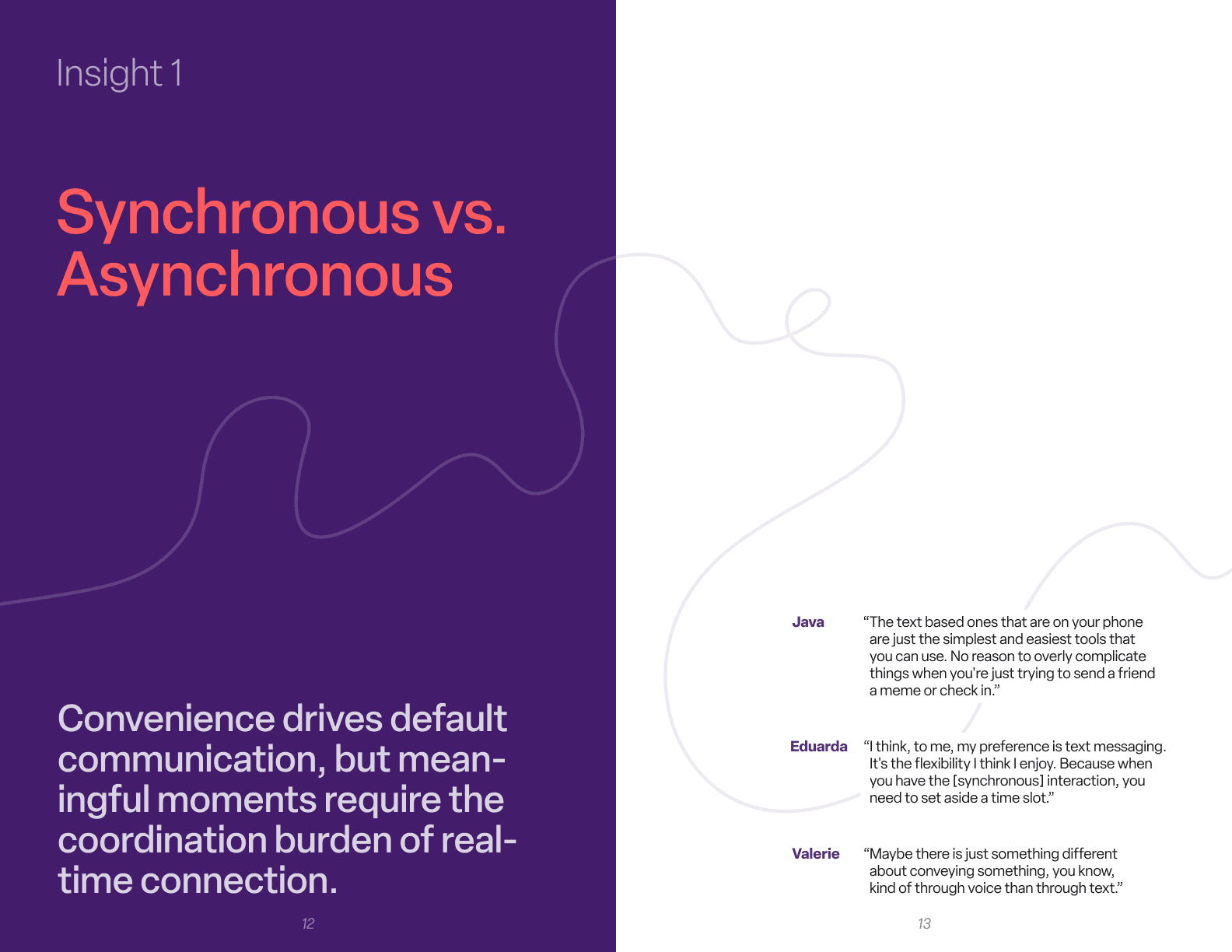
01.
Synchronous vs. Asynchronous
Java
| Age 32
Last Move: 4 yrs ago
Eduarda
| Age 60
Last Move: 29 yrs ago
Valerie
| Age 54
Last Move: 8 yrs ago
02.
Boundaries & Emotional Status
Mike
| Age 41
Last Move: 18 yrs ago
Helen
| Age 33
Last Move: 9 yrs ago
03.
Silent Trust
Nathan
| Age 33
Last Move: 3 yrs ago
Eren
| Age 23
Last Move: 4 mo ago
04.
Mutual Understanding
Helen
| Age 33
Last Move: 9 yrs ago
Nathan
| Age 33
Last Move: 3 yrs ago
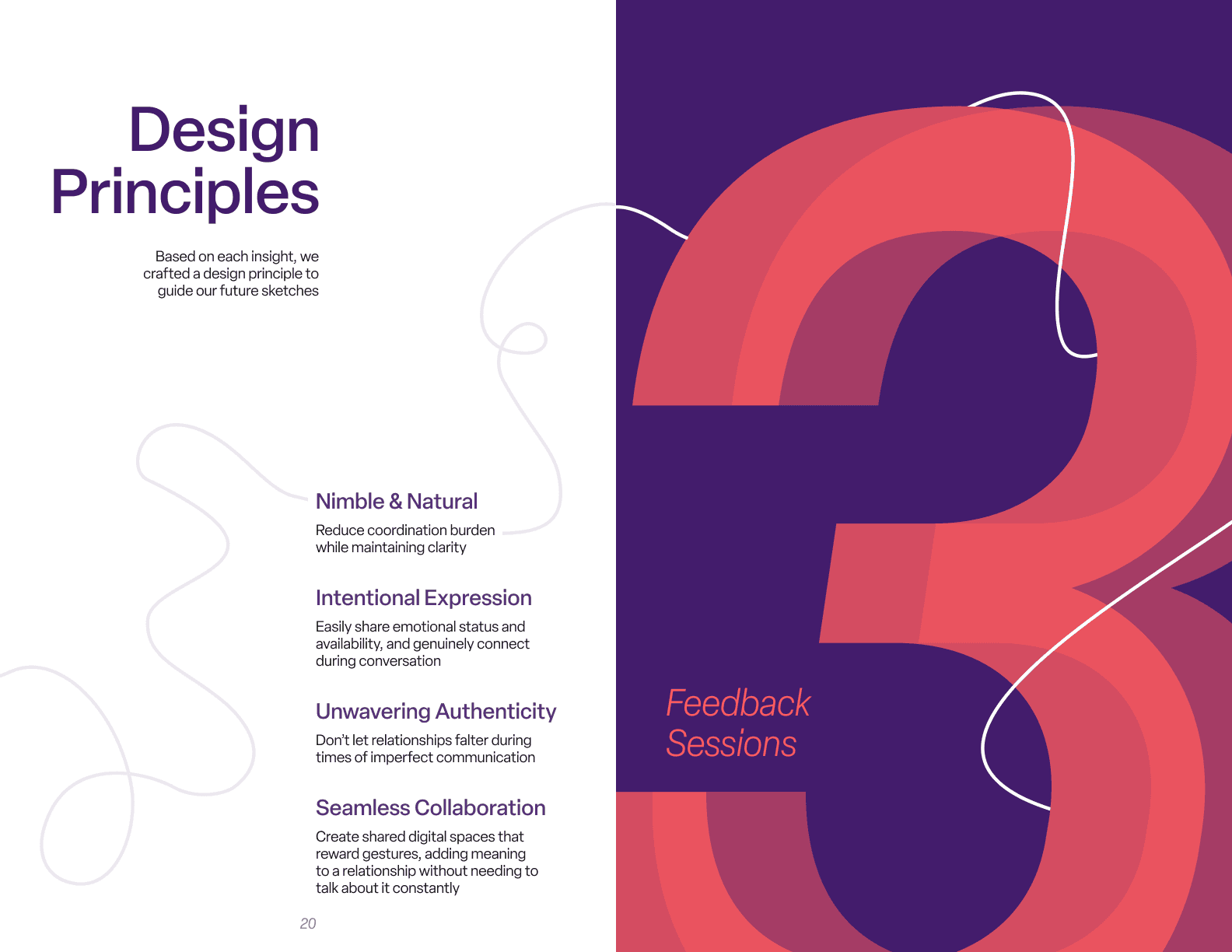
Based on each insight, we crafted a design principle to guide our future sketches.
Nimble & Natural
Intentional Expression
Unwavering Authenticity
Seamless Collaboration
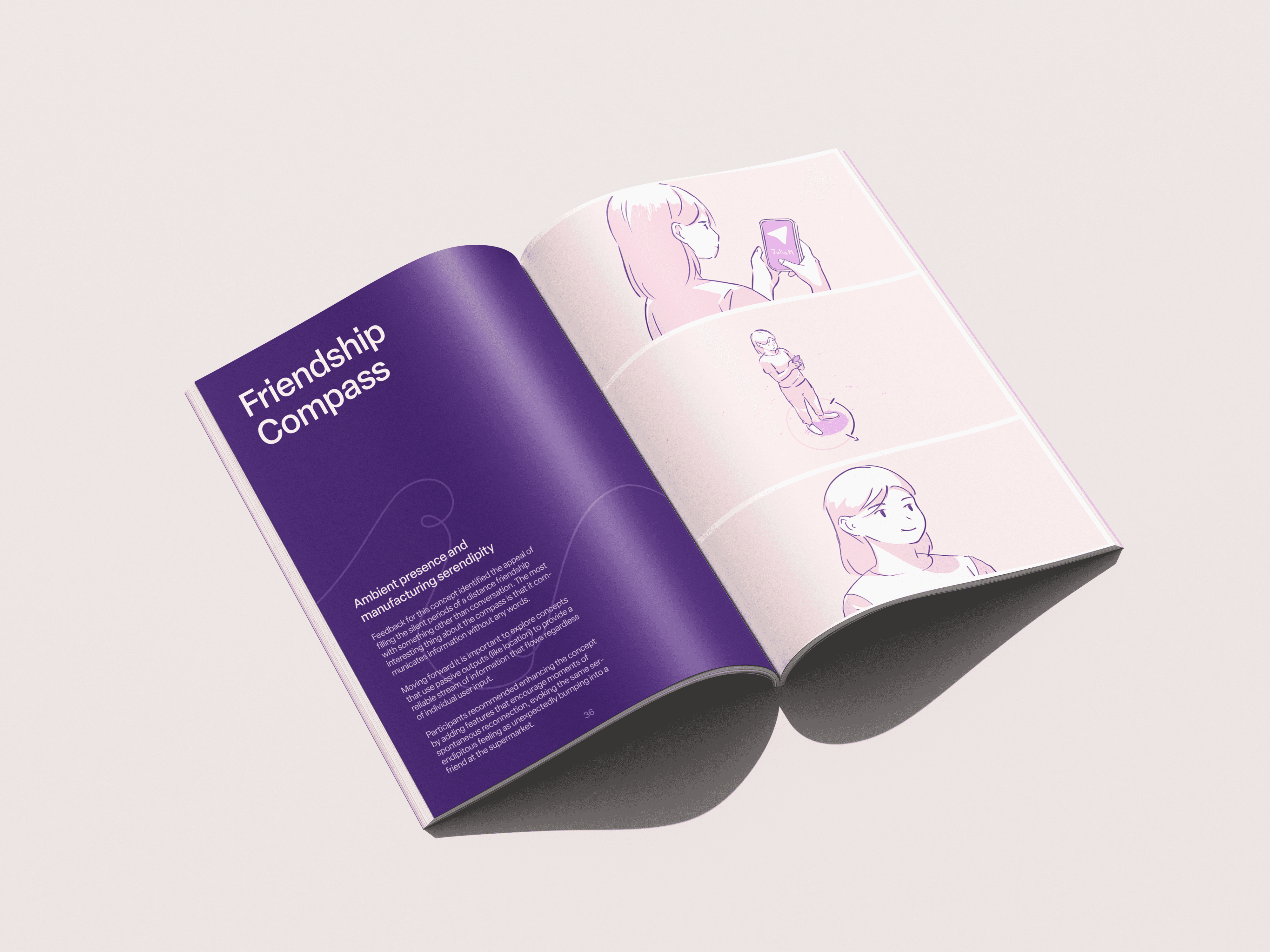
IDEATION.
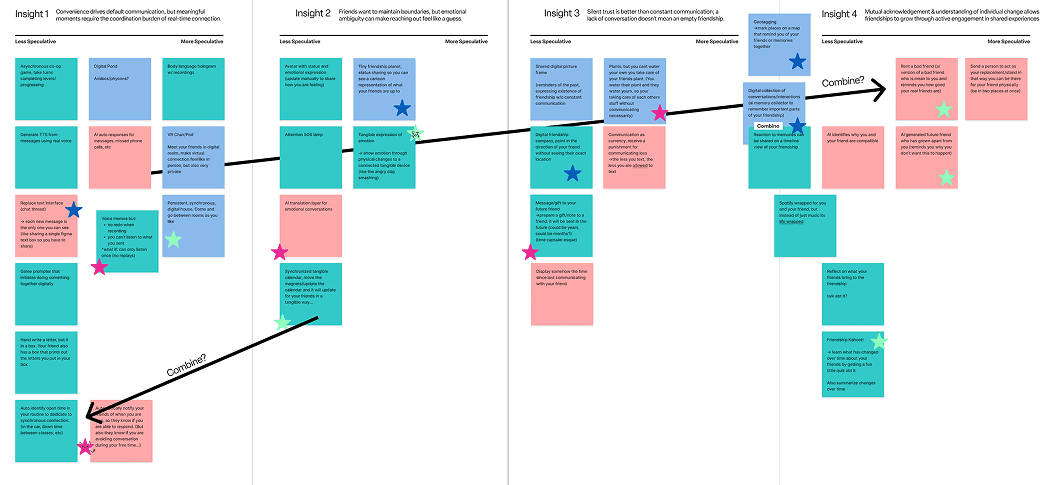
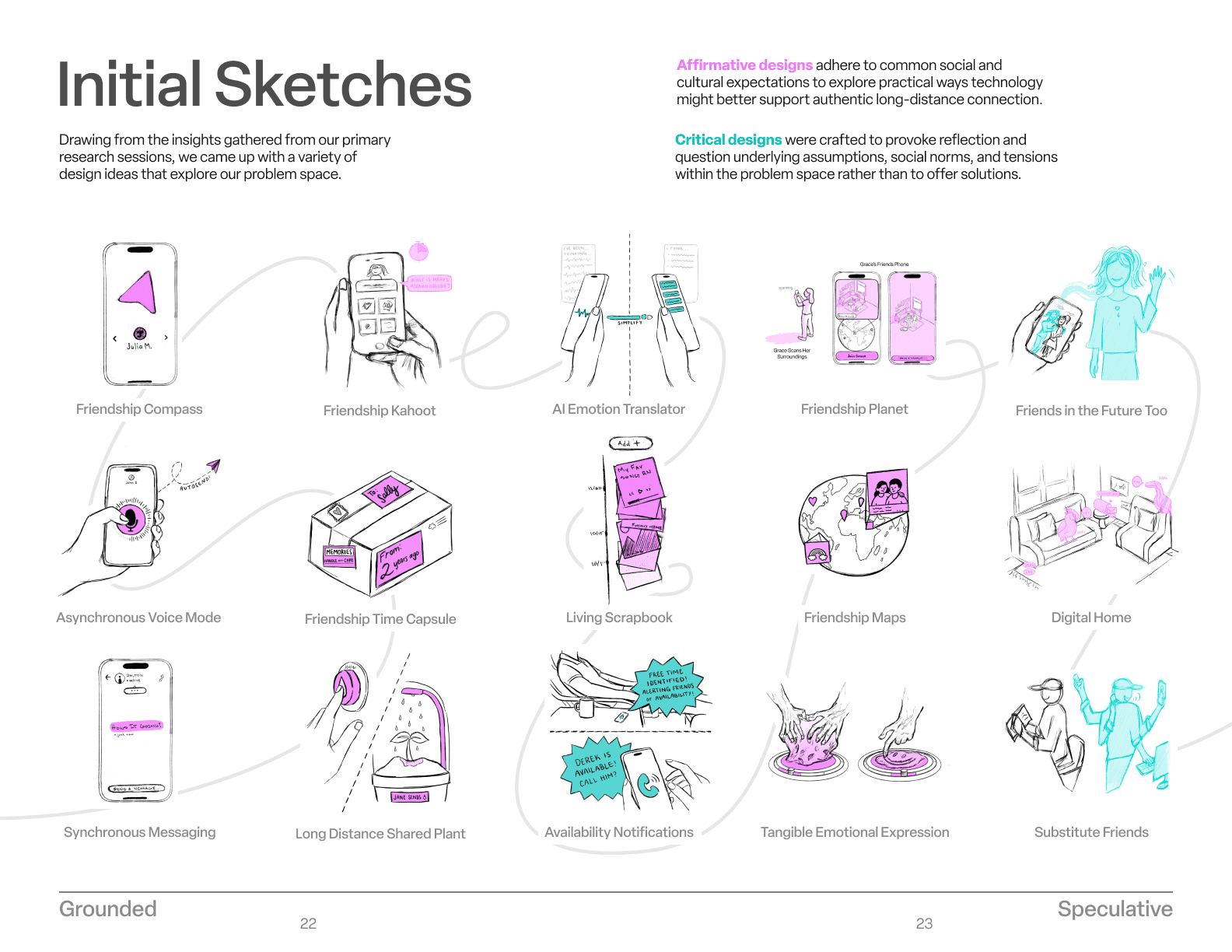
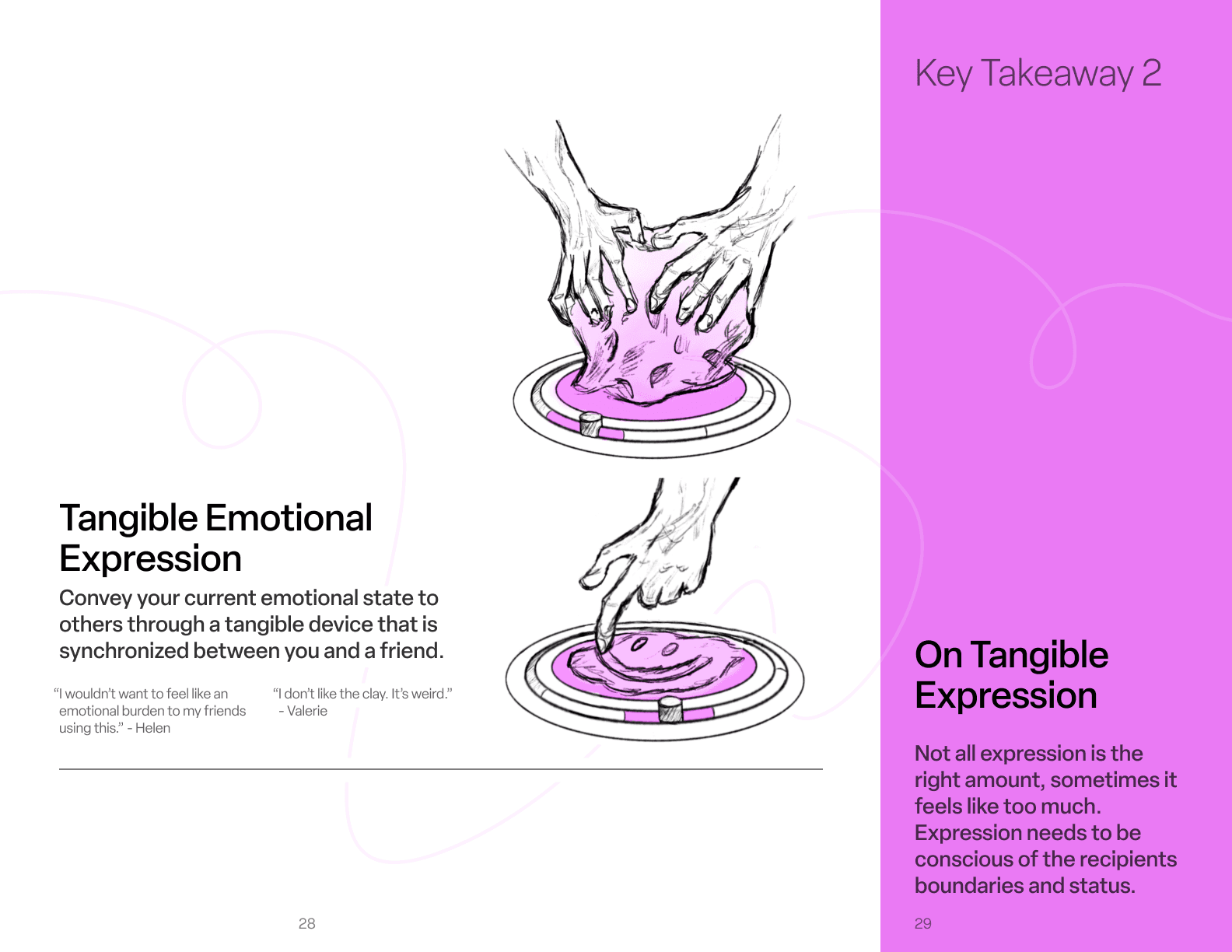
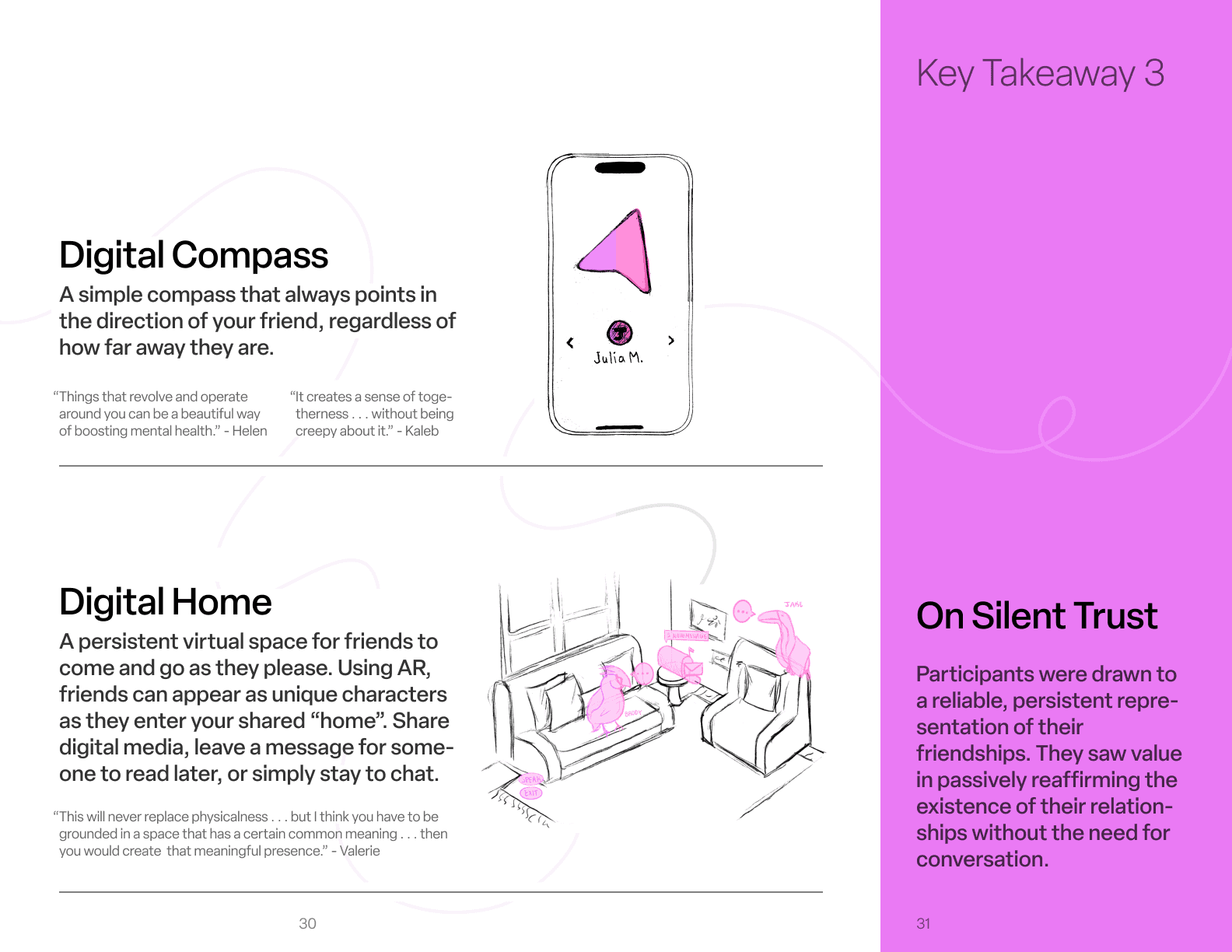
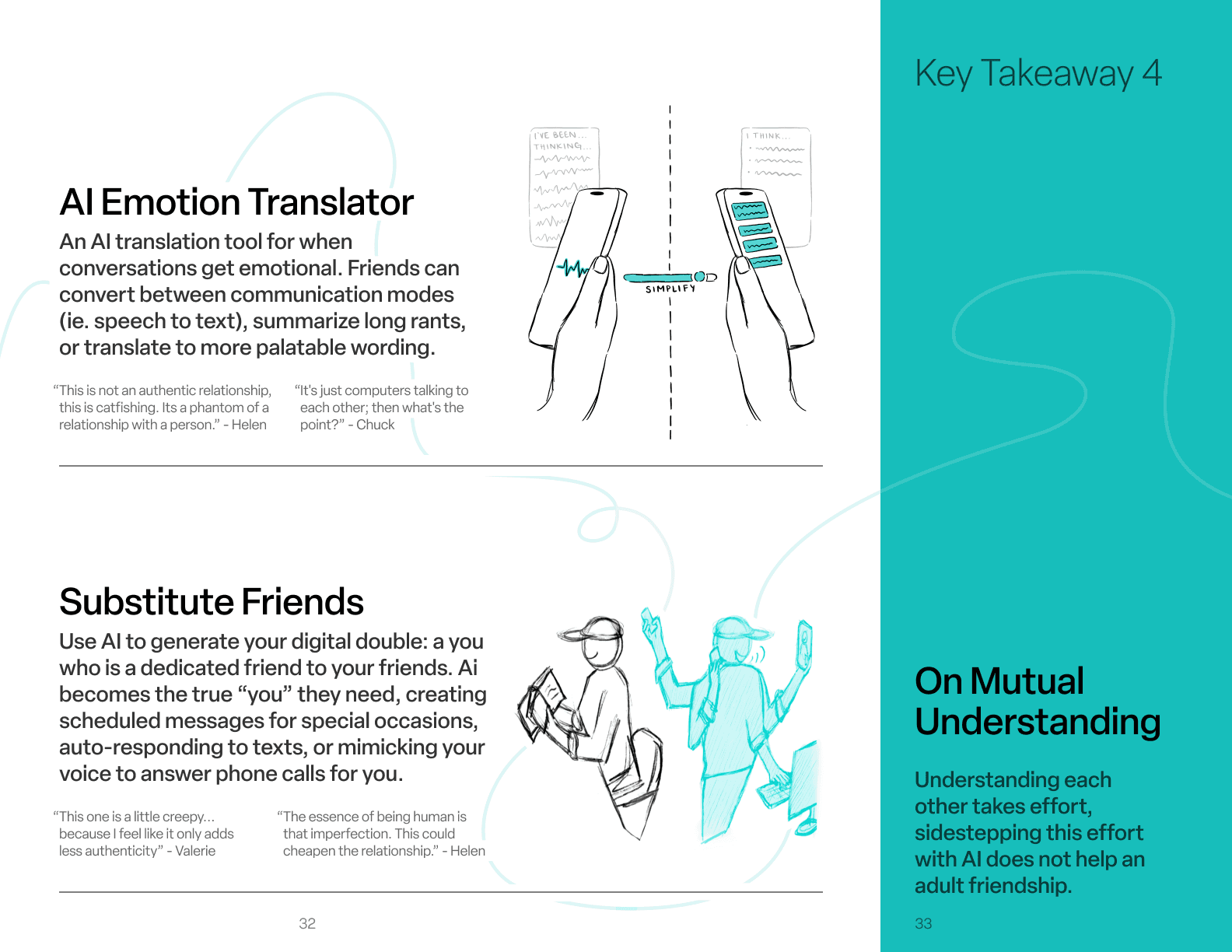
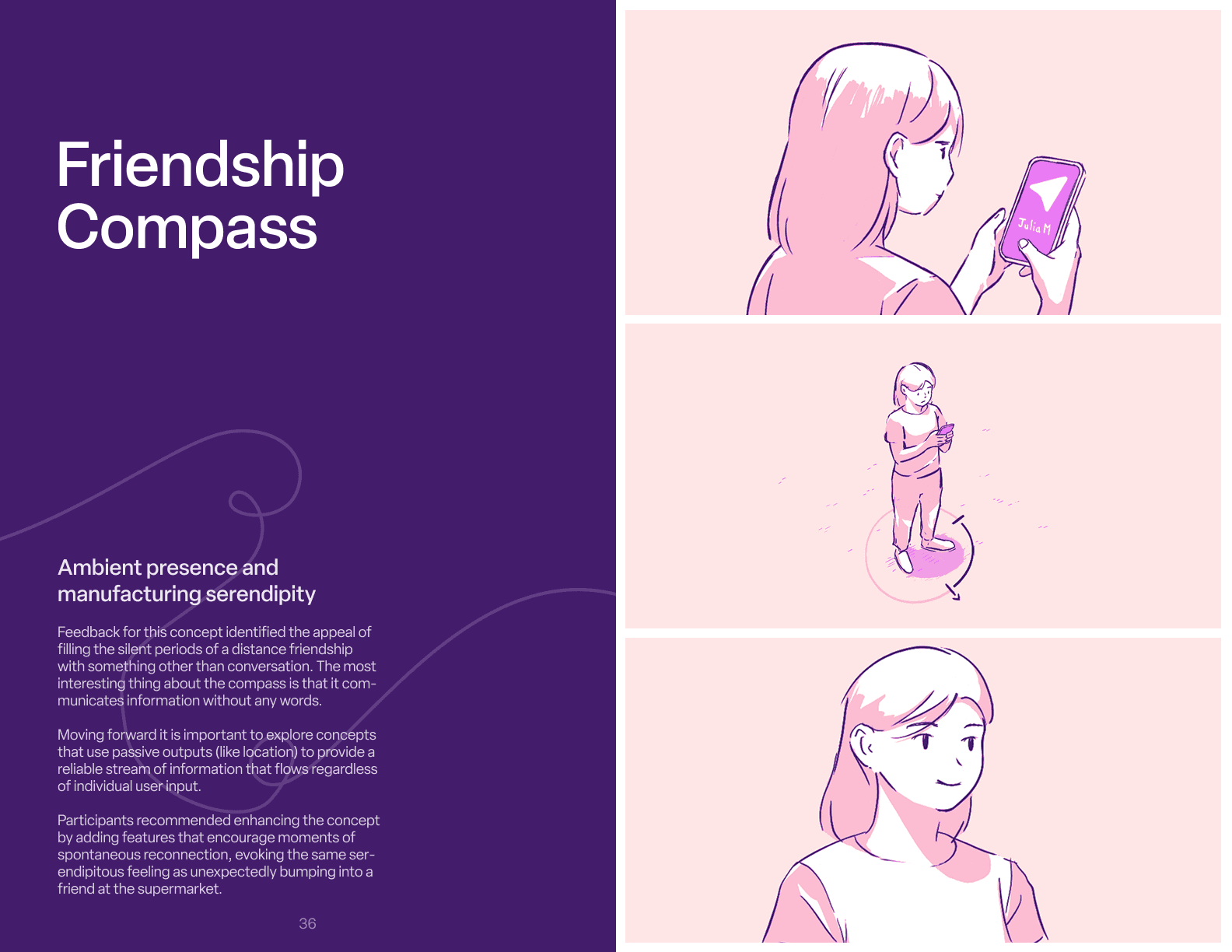
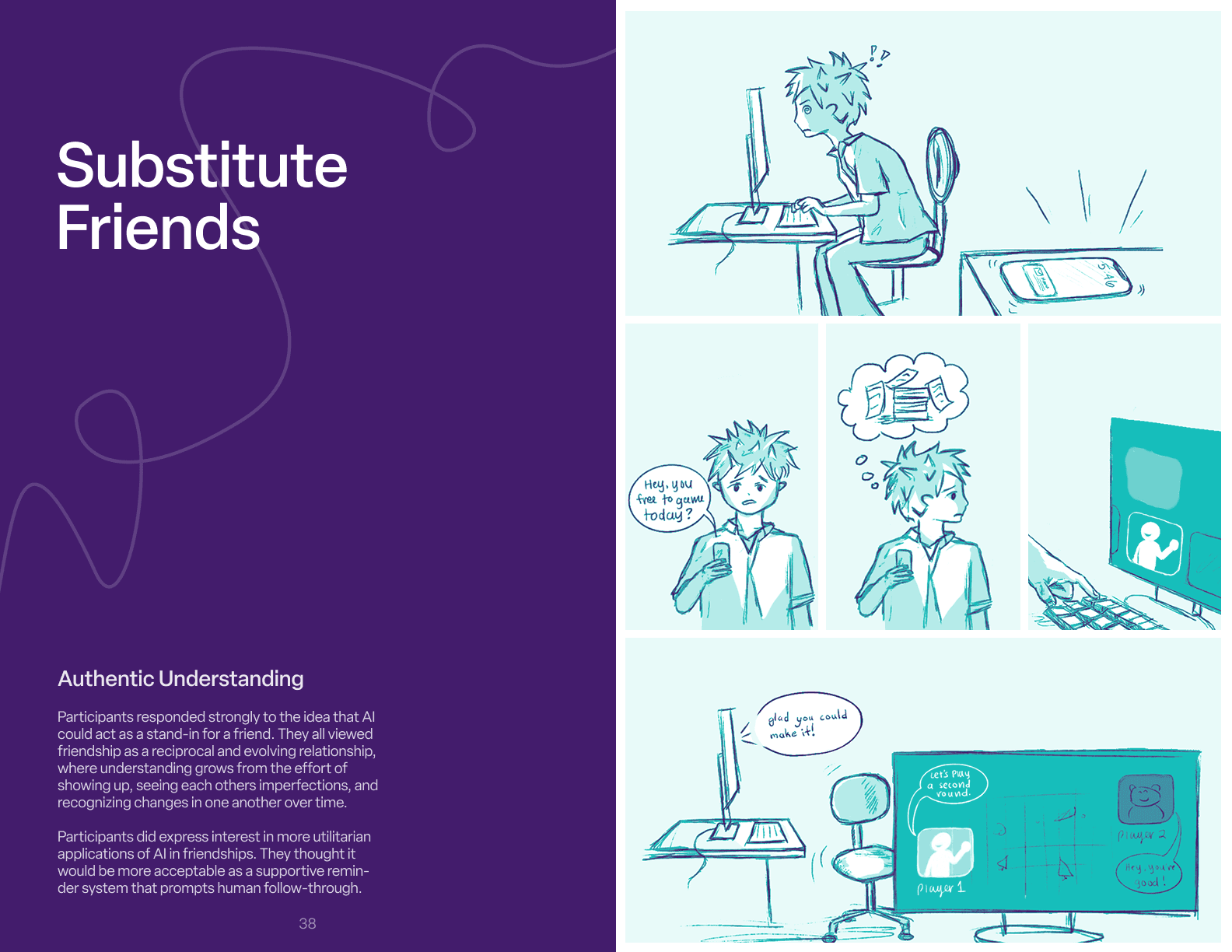
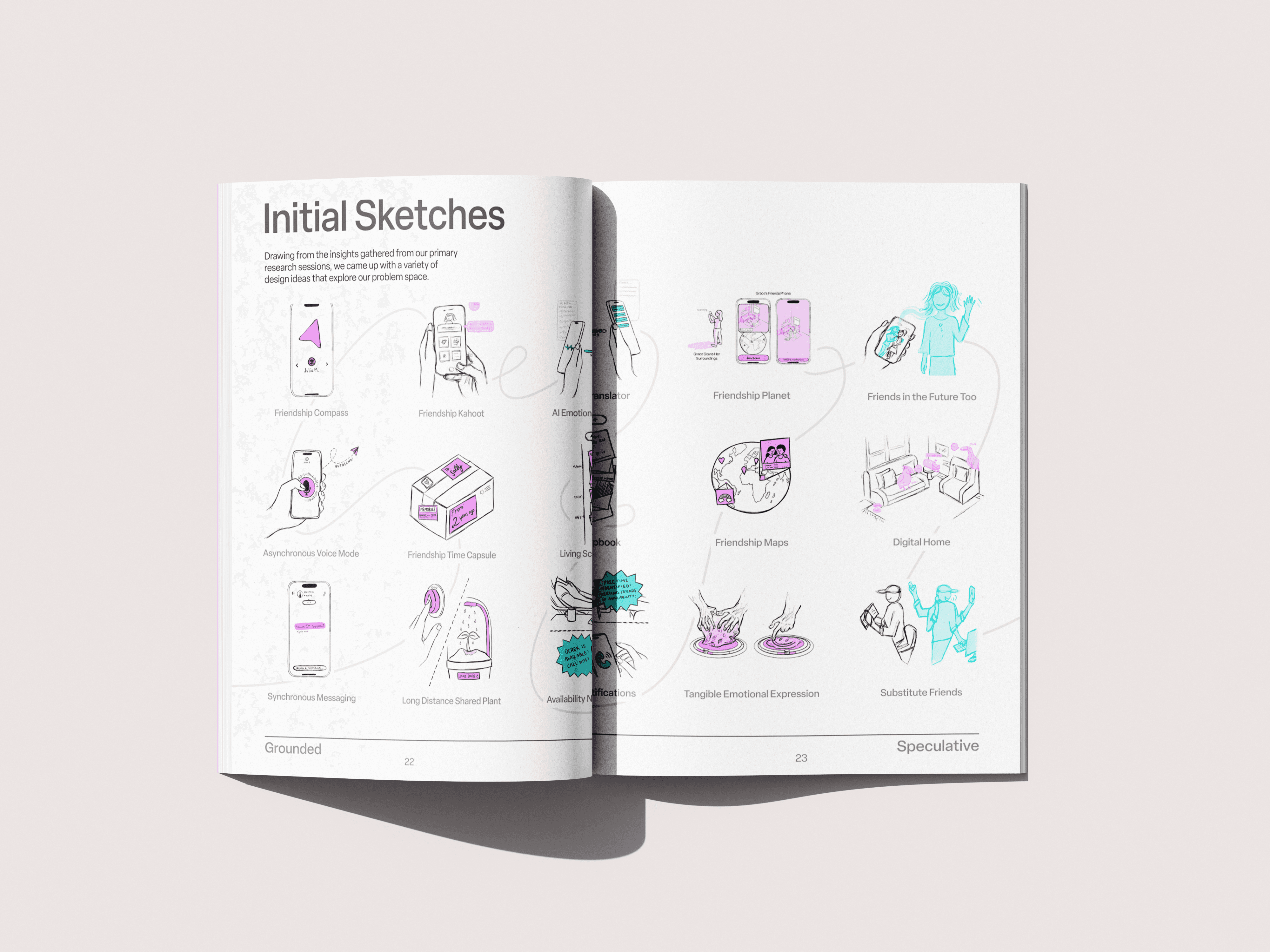
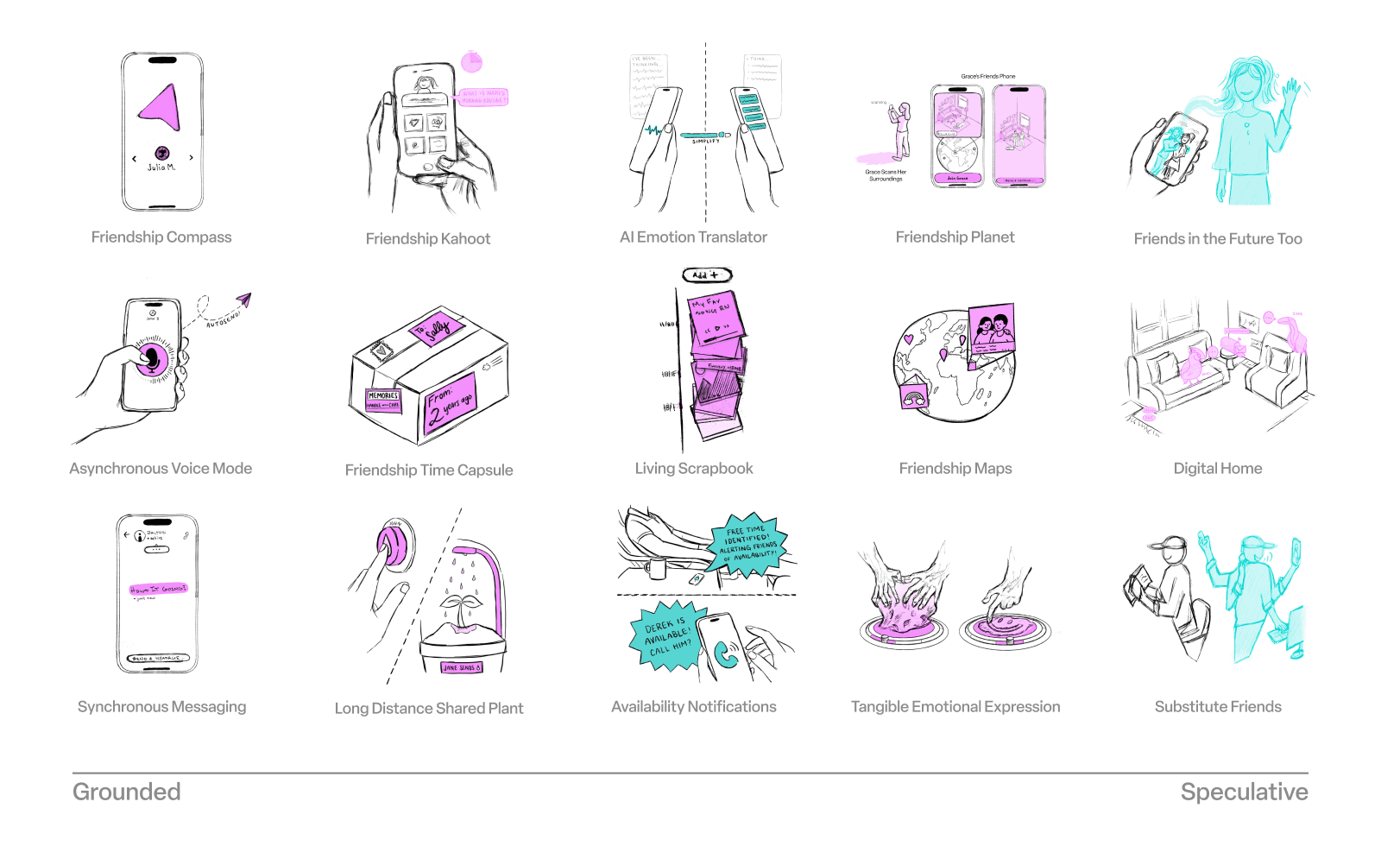
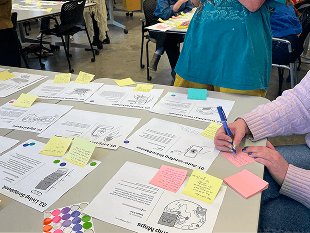
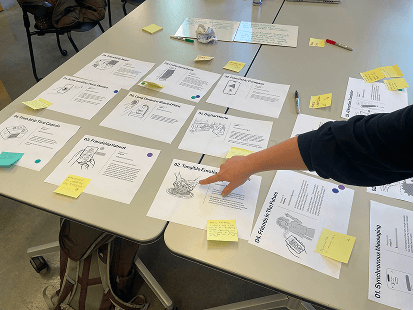
We sorted each idea by the insight it aligned with and selected 15 concepts we felt were the most promising, challenging, or conversation-sparking. These became our first round of sketches, visualizing how future communication tools could respond to the emotional and relational realities we uncovered in research.
Feedback.
final story.
design workbook.