florish.
The Challenge.
Plant care is often overwhelming, with generic advice that fails to account for individual plants, spaces, and routines. Florish uses multimodal AI to deliver personalized, context-aware guidance for more confident plant care.
timeline
6 weeks
SKILLS
Prototyping, AI Integration, User Research
Tools
Figma, Protopie, After Effects, Blender
Team
Esha Nalla & Lia Chon
Primary Research.
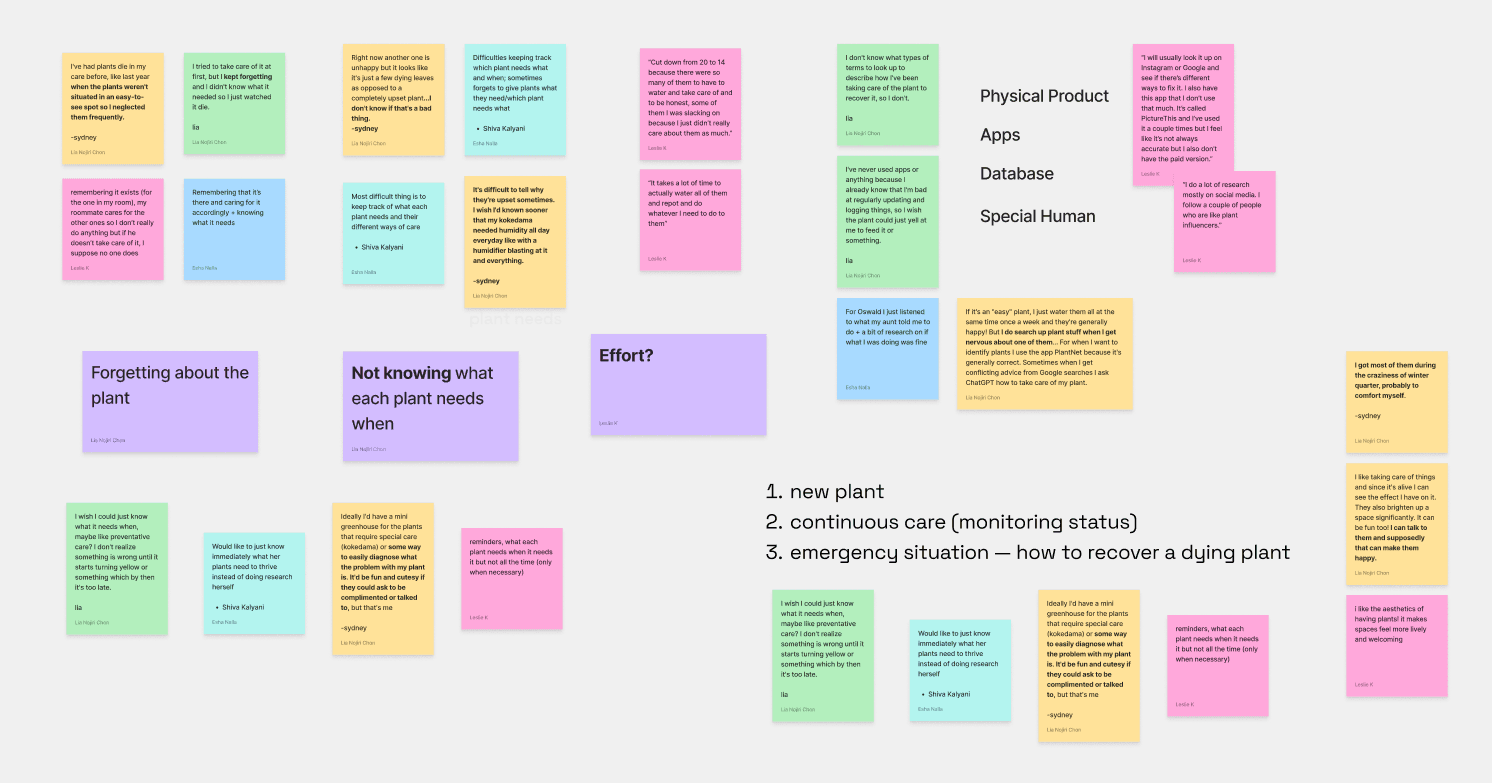
Participants reported difficulties with uncertainty around not knowing what exactly their plants need and when, leading to frustration when maintenance efforts fail to work.
Beginners felt lost without clear guidance, while experienced plant owners wanted more nuanced, personalized feedback. Existing resources either oversimplify care or overwhelm users, leaving them anxious and second-guessing their decisions.
INSIGHTS.
Our research revealed three critical moments in the plant care journey, each requiring different types of support:
New Plant Phase
Users need clear, confidence-building guidance to get started & create routines.
Monitoring Phase
Users want help tracking tasks & interpreting subtle changes before problems escalate.
Emergency Phase
When something goes wrong, users need calm, step-by-step recovery support.
sOLUTION.
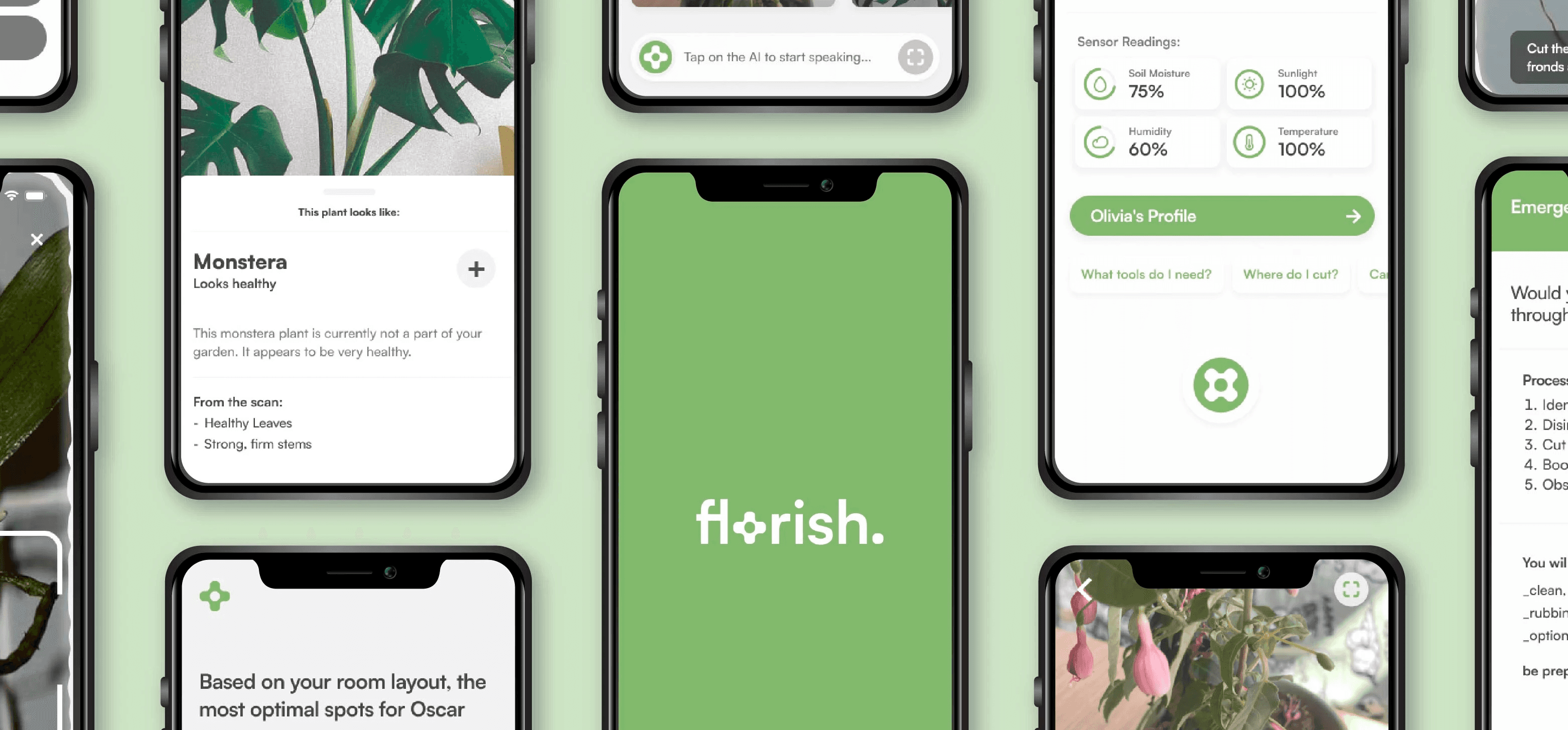
We designed Florish as a holistic plant care resource that helps users understand and respond to their plants' needs within the context of their living environment, routines, and goals.
Rather than treating plants in isolation, our AI-assisted multimodal interface combines sensor data, camera scanning, and personalized guidance to enable sustainable, personalized care over time.
CORE FLOWS.
personalized onboarding & spatial understanding.
The user journey starts with onboarding, where Florish learns the user's experience level and preferences to shape their support and care schedule.
Room scan uses the phone's sensors to analyze the space and light conditions, providing personalized plant placement recommendations rather than generic advice.
plant analysis & growing garden
Florish uses the phone's camera to identify plants and analyze visual health indicators, generating accurate care plans from the start.
After naming their plant, users receive placement recommendations based on room scan data. Additional plants can be added anytime as collections grow.
AI assistant & probabilistic results
An AI assistant is available at any point for questions, concerns, or observations through chat, voice, or scanning.
Because Florish understands each plant's specific context, it creates a probabilistic interface that adapts responses to provide exactly what users need in the moment.
emergency detection & recovery care
When Florish detects a plant in critical condition, it immediately notifies the user and provides diagnosis with step-by-step recovery instructions.
Users can opt for real-time visual guidance through each step. After immediate care, Florish provides next steps and check-ins to monitor recovery progress.
VISUAL SYSTEM.
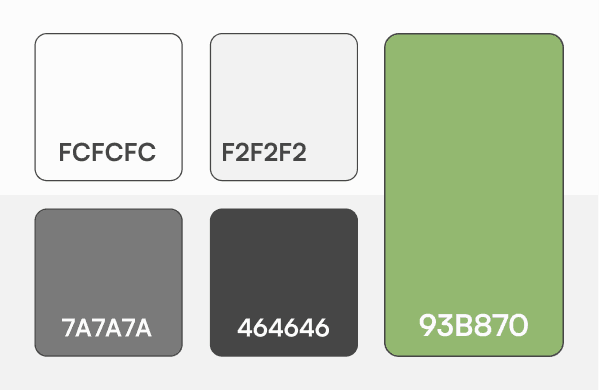
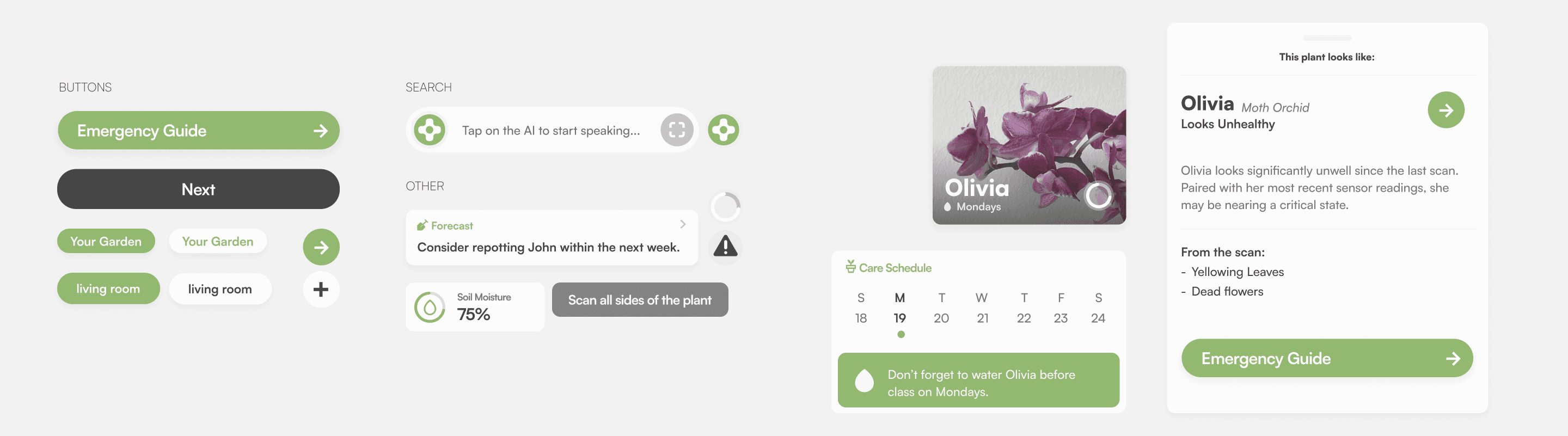
We aimed for a simple, serene visual design that feels calming and unobtrusive.
As participants valued the physical acts of care and aesthetic presence of their plants, we designed the interface to stay supportive in the background without competing with the natural beauty of plants.

plant sensor.
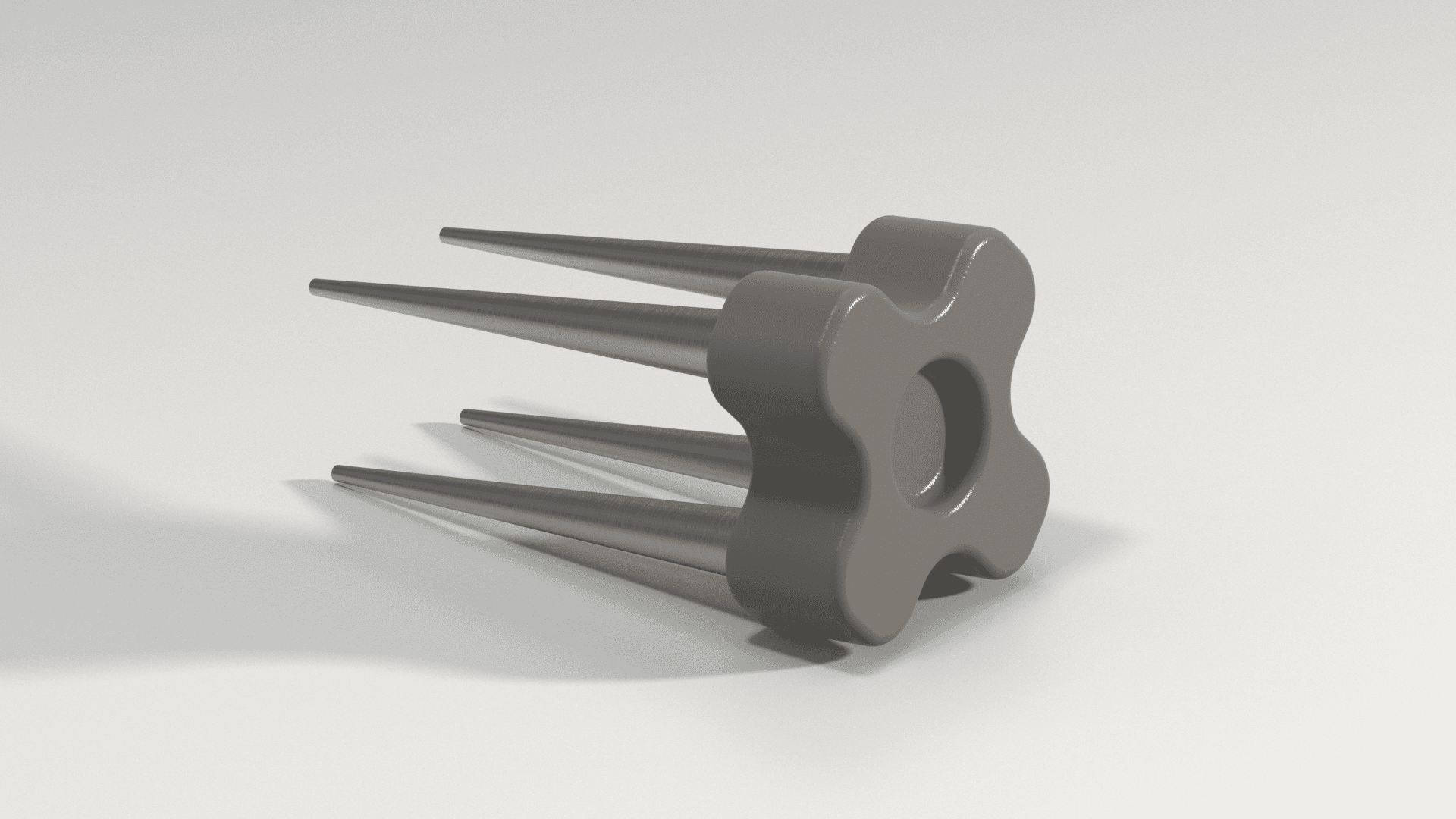
We designed a single, basic sensor for readings on soil moisture, pH, light levels, and more.
This keeps the product financially accessible while leaving room for users to add additional sensors as they see fit.
reflection
i learned and stuff